Chessmen
The House of Hauteville Chess Set
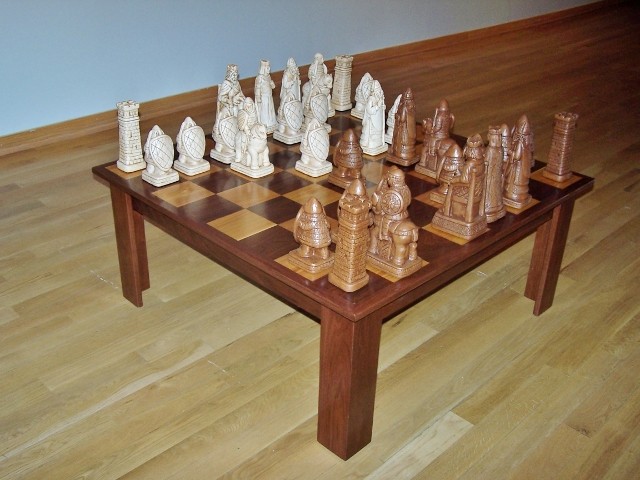
These exquisitely crafted stone resin chessmen were inspired by the adventurous Norman Hauteville family who invaded Italy in the 11th Century. The Hauteville’s were bold and brave warriors and a dominant force in the tumultuous politics of Medieval Europe. Drawing from the example of three chessman found in southern Italy and dating from that era, Carolyn Cavanaugh has designed a 21st Century look at Medieval Chess.
The King and Queen in this imaginative set have been named after Robert Guiscard, son of Tancred Hauteville, and his wife, Sichelgaita, sister of the Lombard Prince, Gisulf of Salerno. Theirs was a union of political contrivance, but they became the dynamic duo of medieval Italy. Sichelgaita bore ten children, but that did not keep her from going into battle with her husband. The exploits of this couple were of epic proportion, and in one fight with the Byzantines at Durazzo, a fully armed Sichelgaita reportedly charged behind the lagging troops exhorting them into the fray with her sword. As invulnerable as Robert may have been in battle, he was no match for an epidemic of fever. He died on the 17th of July 1085 in a cove where he sought refuge while sailing southward from Corfu to meet his son. Sichelgaita was, as always, by his side. She lived another five years before dying in her native city on the 16th of April 1090. She was buried at Monte Cassino according to her wishes.
At the whimsy of the artist, and bearing in mind the old saying that a cat may look upon a king, this chess King has been given one to sit upon his lap. The Queen is carrying a hawk because it seems consistent with her fighting spirit. The two knights are named Tancred and Drogo after Robert’s father and brother. The bishops wear confused expressions to reflect the religious conflict of that era, and the pawns stare blindly as well they might have with the enemy in front of them and Sichelgaita behind.. They await your opening gambit.